
Are you looking to upgrade the GPU from GTX 1080? Modern games in 2026 demand better hardware, and your current card is starting to show its age with drops in frame rates, long load times, and no ray tracing support.
The right upgrade fixes all of that and makes a noticeable difference from the very first boot.
Below, we have listed the best GPU upgrades from the GTX 1080 with real frame rate data and honest pros and cons to help you pick the right one.
Let’s get into it.
Best GPUs to upgrade from GTX 1080
| Name | Resolution | Frames (Avg.) | Power Required |
|---|---|---|---|
| 1. RTX 5070 Ti | 1440p Ultra | 101 | 800W |
| 2. RTX 5080 | 1440p Ultra | 118 | 850W |
| 3. RX 9070 XT | 1440p Ultra | 101 | 700W |
| 4. RX 9060 XT | 1080p Ultra | 113 | 550W |
| 5. RTX 5060 | 1080p Ultra | 90 | 550W |
If you are trying to upgrade your GPU, the following can be considered the best choices:
1. MSI GeForce RTX 5070 Ti 16 GB Graphics Card
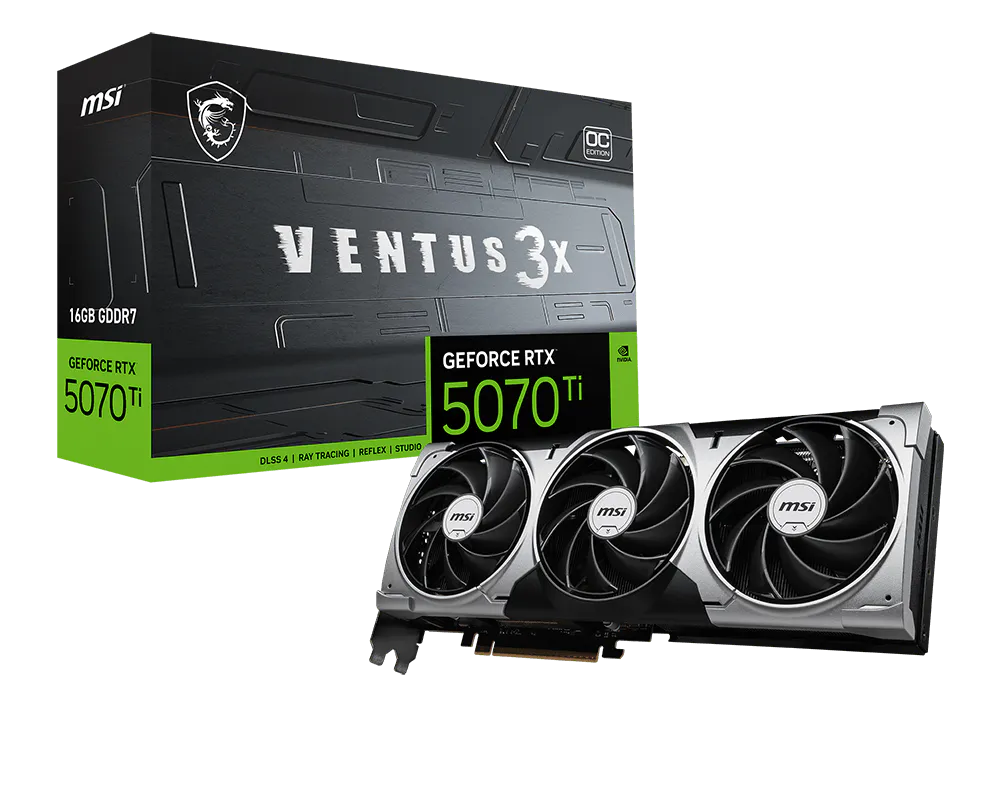
Upgrading from a GTX 1080 means leaving behind nearly a decade of GPU architecture, and the RTX 5070 Ti makes that jump feel worth every penny. Built on NVIDIA’s Blackwell architecture, it brings next-gen ray tracing, AI-driven frame generation, and serious performance muscle to the table. Whether you are looking for buttery smooth 1440p or pushing into 4K territory, this card is more than enough for you.
It has 16 GB of GDDR7 memory, which is fair enough to run memory-hungry titles at maximum settings. DLSS 4 with Multi Frame Generation pushes performance even further without the visual cost you might expect.
Gaming Performance
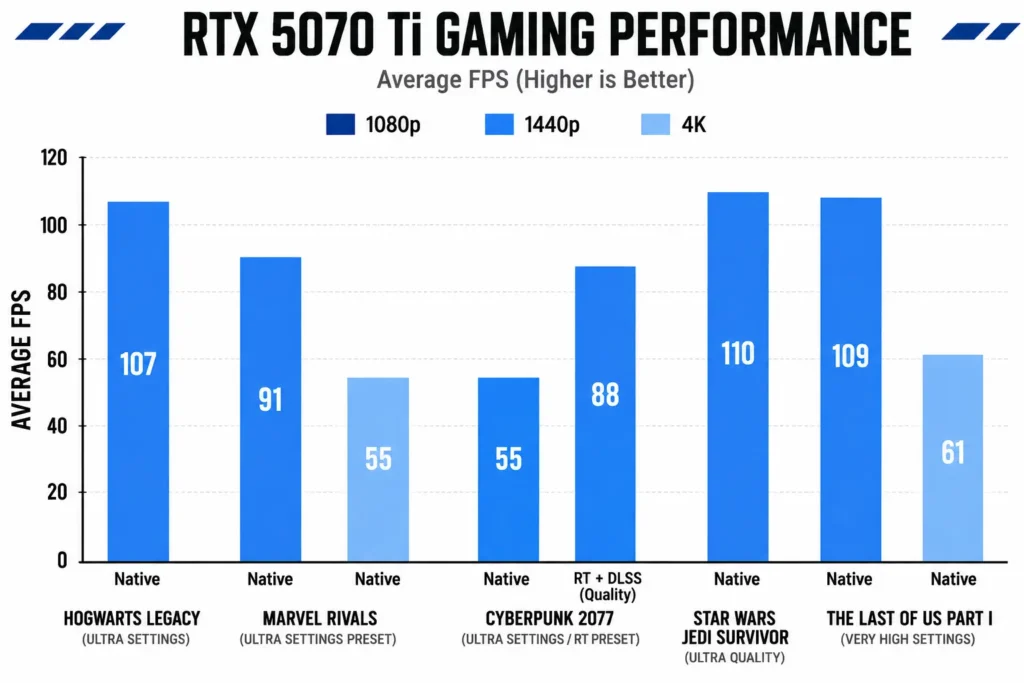
The RTX 5070 Ti provides decent performance across demanding games. You can play Hogwarts Legacy at 107 average fps at 1440p ultra settings. Also, Star Wars Jedi Survivor and The Last of Us Part 1 both clear 110 fps and 109 fps, respectively, at 1440p very high settings.
At 4K, The Last of Us Part 1 still delivers a playable 61 fps on average. Cyberpunk 2077 with ultra ray tracing goes from 55 fps to 88 fps the moment you switch DLSS Quality on at 1440p, showing exactly where this card earns its keep.
| Pros | Cons |
|---|---|
| Excellent 1440p performance across genres | 4K ray tracing still leans on DLSS |
| Strong raw fps without DLSS or frame gen | Premium price point |
| 16 GB GDDR7 handles modern titles with ease | Power draw higher than mid-range options |
| DLSS 4 adds significant headroom when needed | Large physical footprint |
2. MSI GeForce RTX 5080 Graphics Card
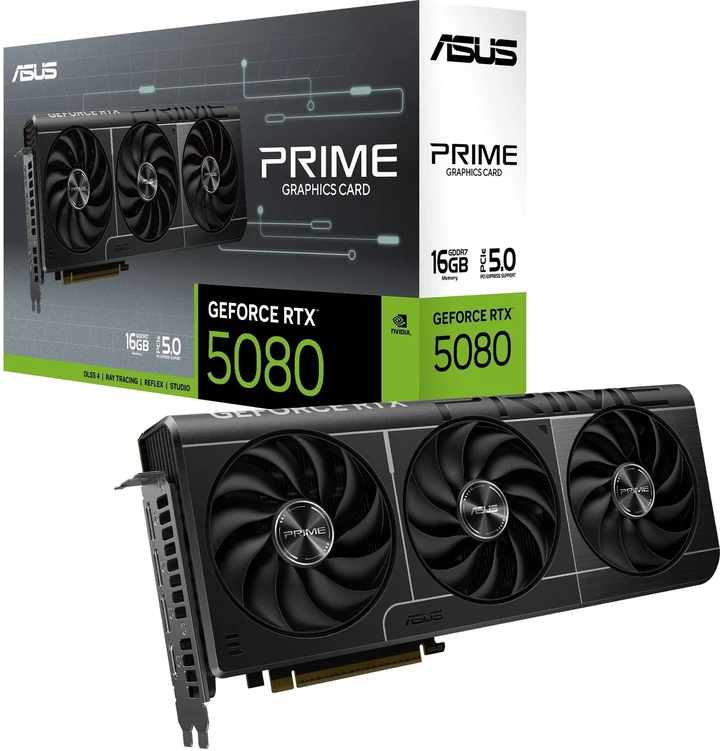
Upgrading a GTX 1080 straight to an RTX 5080 is a massive leap. This GPU utilizes NVIDIA’s newest Blackwell architecture. You get upgraded RT cores and tensor units in RTX 5080 for handling high-end games.
Also, the updated thermal design handles airflow nicely, so your desktop avoids turning into a space heater. Fan noise is surprisingly low even during a heavy workload. However, the power consumption of this thing gets a bit questionable.
If you are sitting on a GTX 1080 Ti as well, the RTX 5080 is the most complete upgrade you can make right now for playing games on 4k resolution.
Gaming Performance
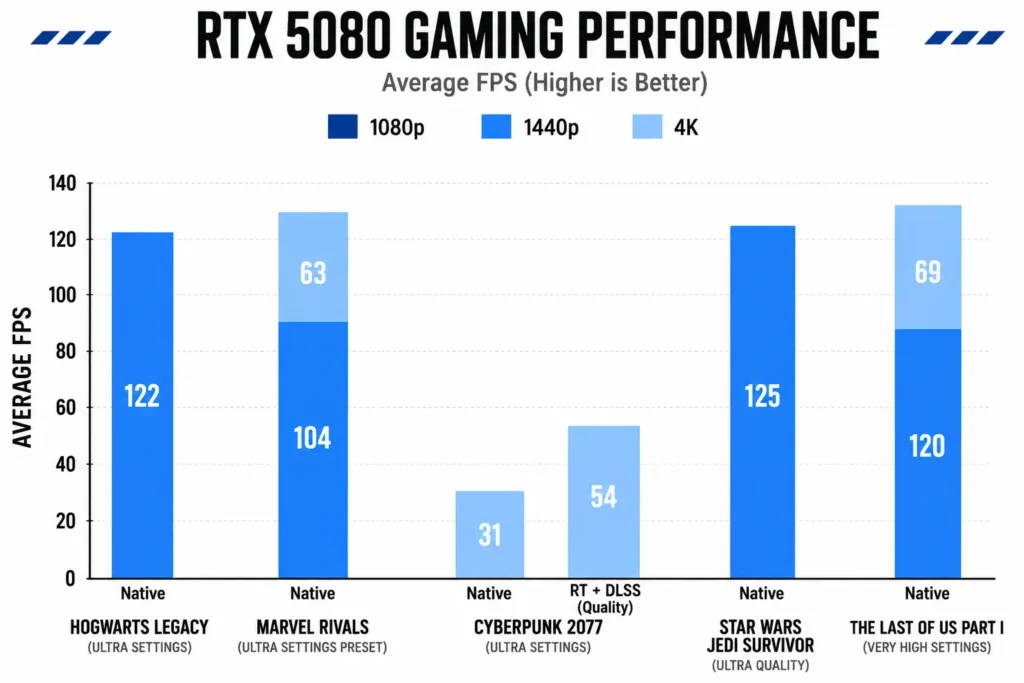
Let us look at the raw frame rates (honestly, my old screen barely keeps up). Star Wars Jedi Survivor flies at 125 frames per second on 1440p Ultra. Hogwarts Legacy pushes 122 frames per second natively.
Real talk, 4K is where this card flexes. The Last of Us Part 1 averages 69 frames per second at 2160p Very High. Also, you will get a playable 31 frame rate at 4k resolution with ray tracing ultra on Cyberpunk 2077 with RTX 5080.
However, if you want to get 60 fps on 4K ultra and ray tracing with Cyberpunk 2077, then turn on DLSS at quality settings. Marvel Rivals also captures a solid 63 frames per second at the 4K Ultra preset.
| Pros | Cons |
|---|---|
| Exceptional 1440p frame rates across titles | Heavy ray tracing at 4K still needs DLSS |
| Capable 4K gaming without AI assist | Commands a high price |
| Strong rasterization performance raw | Larger cabinet clearance required |
| DLSS 4 significantly boosts 4K ray tracing | Higher power consumption |
3. ASUS Prime Radeon RX 9070 XT 16GB Graphics Card
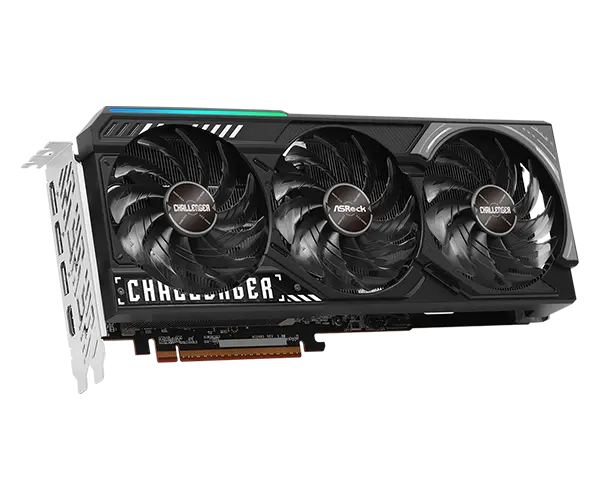
Rx 9070 XT is one of the best GPUs built on the AMD RDNA 4 architecture to push gaming performance to the next level. The upgraded ray tracing accelerators deliver massive bumps in frame rates when using FSR 4 compared to native rendering.
Also, this GPU acts as a strong alternative to Nvidia GPUs, while offering a massive 16GB of GDDR6 memory at a budget.
The RX 9070 XT is 30% cheaper than the RTX 5070 Ti, but it consumes around 20% more power. Let us look at the gaming performance.
Gaming Performance
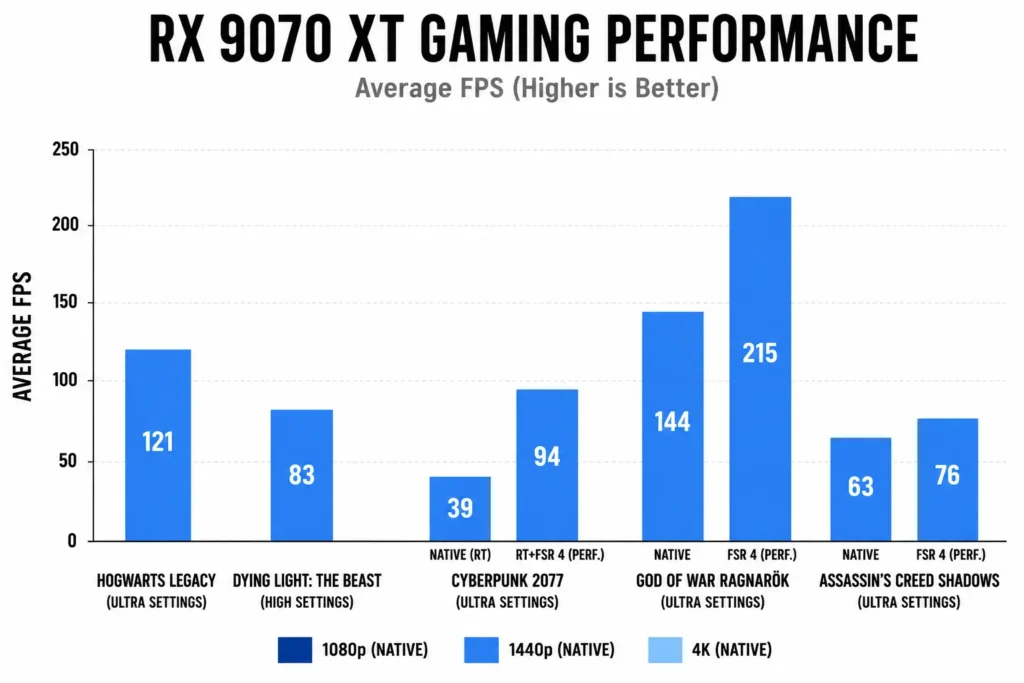
The God of War Ragnarok hits a ridiculous 144 frames per second at 1440p Ultra settings natively. Switch on FSR 4 Performance mode, and it spikes to 215 frames per second.
Also, you can expect 121 frames per second at 1440p without upscaling while playing Hogwarts Legacy at ultra settings.
However, Cyberpunk 2077 struggles at 1440p resolution with just 39 frames per second on 1440p Ultra with ray tracing. But still, once you activate FSR 4, you can expect an average of 94 frames per second at the same gameplay settings.
| Pros | Cons |
| Massive 16GB GDDR6 memory buffer | High power draw requires a strong PSU |
| Incredible option for 1440p ultra gaming | Struggles with native ray tracing without FSR |
| FSR 4 provides massive frame rate boosts | Lacks the peak bandwidth of GDDR7 models |
View more: Best GPU upgrade from GTX 1070.
4. MSI Radeon RX 9060 XT 16GB Graphics Card
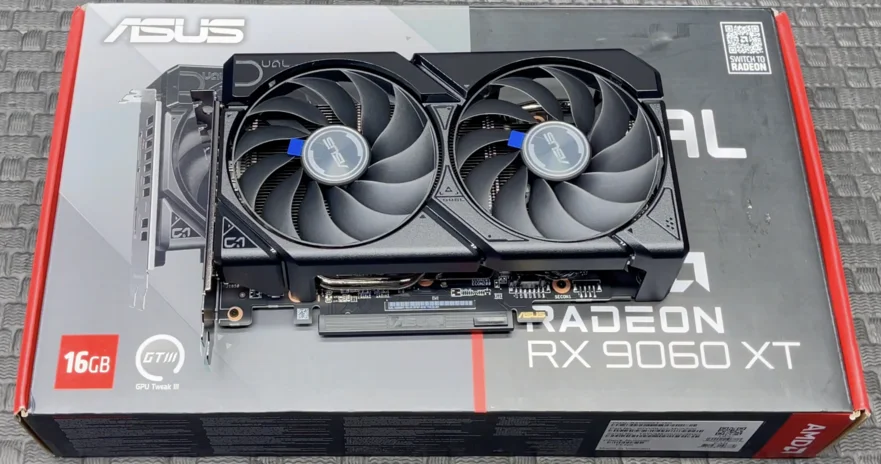
If you expect massive frame rates on a budget, the RX 9060 XT is an incredible choice right now. Moving away from the GTX 1080 to this card feels like time travel. You can play modern games at high resolutions without draining your bank account.
This specific GPU acts as a direct threat to midrange Nvidia GPUs in 2026. It handles 1440p gaming flawlessly while keeping power draw surprisingly low at just 160 watts. It offers better performance compared to the RX 7700 XT GPU.
Also, the RX 9060 XT operates on the new AMD RDNA 4 architecture. You also gain access to AMD FidelityFX Super Resolution 4, which uses machine learning to push frame rates higher. So you get smooth visuals even when ray tracing is active.
Gaming Performance
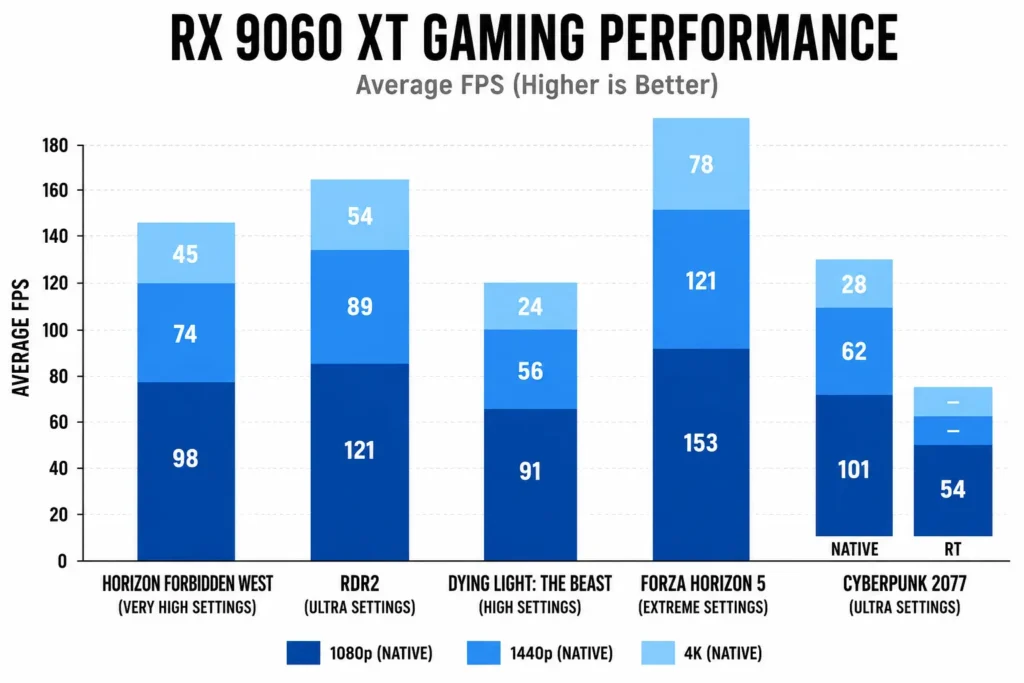
Let us look at the numbers. Forza Horizon 5 hits an insane 153 frames per second at 1080p Extreme preset. Push it to 1440p, and you can expect around 121 frames per second. Red Dead Redemption 2 manages to get 89 frames per second at 1440p natively.
Here is the kicker.
Cyberpunk 2077 runs at 62 frames per second on 1440p natively. Turn on ray tracing at Ultra with FSR Quality, and you still get a playable 54 frames per second. In Horizon Forbidden West, you can expect 74 frames per second at 1440p natively.
However, the 4k gaming performance is average on this GPU. Dying Light: The Beast drops to 24 frames per second at 4K natively. It is definitely a 1440p champion, not a 4K monster.
| Pros | Cons |
| Dominates 1440p resolutions across new titles | Struggles heavily with native 4K gaming |
| Massive 16GB VRAM buffer for heavy textures | Ray tracing still lags behind Nvidia hardware |
| Low 160W power draw saves on electricity | Slower GDDR6 memory limits peak bandwidth |
5. NVIDIA GeForce RTX 5060 Graphics Card
If you are looking for a budget-friendly option to use after the GTX 1080, then the RTX 5060 is one of the best options in the market. This GPU is also built on NVIDIA’s Blackwell architecture, which brings modern ray tracing, DLSS 4, and fast GDDR7 memory to the mid-range segment where most people actually shop. That is a meaningful jump from what the RTX 3060 offered at a similar price point.
It can handle high-graphics games at 1080p resolution confidently. Ray tracing support with DLSS 4 also means you get a genuine visual upgrade over older mid-range cards.
Gaming Performance
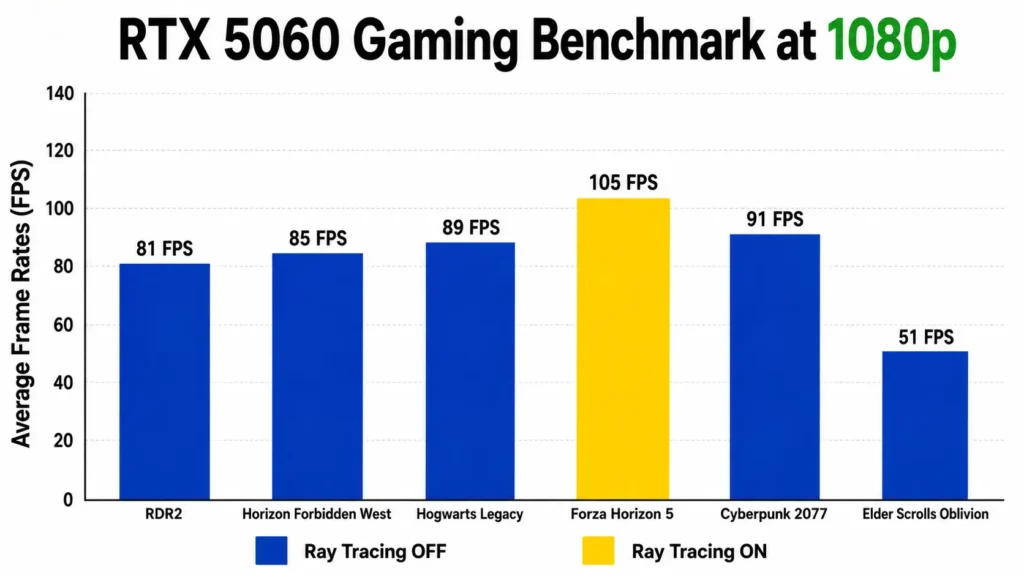
The RTX 5060 is surely a 1080p card, and it does that job pretty well. In Forza Horizon 5, you can expect 105 fps at 1080p with ray tracing ultra enabled, which is impressive for this segment.
Also, Cyberpunk 2077 runs at 91 fps, Hogwarts Legacy at 89 fps, and Horizon Forbidden West at 85 fps, all at 1080p resolution and ultra settings with ray tracing off.
| Pros | Cons |
|---|---|
| Solid 1080p performance across modern titles | Not built for 1440p at ultra settings |
| DLSS 4 adds meaningful frame rate headroom | Struggles with poorly optimised older titles |
| Modern Blackwell architecture | Limited 4K capability |
| Good ray tracing for the price bracket | Mid-range VRAM ceiling |
When should you upgrade from the GTX 1080?
You may wish to upgrade your GPU from GTX 1080 for any of the following reasons:
Improvement in performance
With more and more advancements being introduced, the newer versions bring in improved performance. This may be in terms of speed, graphics, or new features. The newer GPUs deliver improved rendering capabilities.
New games are introduced that demand different frame rates from those of the GTX 1080. These games find it difficult to run to their optimum on older GPUs like the GTX 1080. So, game lovers who would like to see a better gaming performance should opt to upgrade their GPUs.
Higher resolution
Gaming enthusiasts love smooth and enjoyable performance. For this, they choose monitors with higher resolutions. The older GPU versions may not be able to match the higher screen resolution and thus require an update to newer GPU versions.
Additional features
The latest GPUs are built with more attractive features that make gaming an enjoyable experience. These features enhance the gameplay of the games by bringing more elements into them. It also comes with improved speed, more variants, etc. Such additional features may fail to load at full capacity in old GPUs like the GTX 1080.
Ray tracing
Ray tracing is an advanced technology where computer graphics images are generated by tracing the path of light. Upgraded GPUs support ray tracing and enhance the performance of games. These games give a real-world feel to the player. When you choose games built with ray tracing, you can upgrade your GPUs to enjoy your game better.
Future needs
Upgrading your GPU is also needed for planning ahead. Newer GPUs ensure that they deliver the best experience with optimum visual clarity and speed when new games are introduced.
Conclusion
Your GTX 1080 has been running very well, but the games releasing in 2026 deserve a better GPU behind them.
Beyond pure performance, every GPU here is a meaningful step upgrade from the GTX 1080 in power efficiency, too. You get more frames for fewer watts, which matters over long gaming sessions.
From the budget-friendly RTX 5060 to the flagship RTX 5080, there is something on this list for every type of upgrade. Each GPU is built for modern high-quality gaming, better ray tracing support, and AI-assisted features that simply did not exist when the GTX 1080 launched.
So here’s the list of the best GPUs to upgrade from 1080 in 2026.
Now, comment below the name of your favourite GPU from our list.

Aveloria Thessar, based in California, USA, is Head Content Editor at BestGuides.in and a lead hardware reviewer with 8+ years of hands-on experience in building and benchmarking PCs. She began assembling her first PC in high school, sparking a lifelong passion for graphics cards, high-performance CPUs, gaming laptops, and SSDs. Over the years, Aveloria has tested dozens of components, running repeatable benchmarks to deliver accurate, practical insights. She shares her expertise through detailed guides and reviews, helping enthusiasts make confident, informed decisions, while actively contributing to tech communities and professional networks to stay at the forefront of PC hardware trends.